Key takeaways
- Meme coins derive value primarily from community attention and momentum rather than a defined technical use case.
- Dogecoin is widely regarded as the token that established the category, and its longevity shows meme coins can sustain real communities over time.
- Meme coins as a category show extreme volatility, even relative to the broader crypto market.
- The low barrier to launching a new token makes the category a common setting for pump-and-dump schemes.
- Losing most or all of an investment is a realistic, common outcome for individual meme coins, not a rare tail risk.
A meme coin is a cryptocurrency whose value is driven overwhelmingly by community attention, humour, and momentum rather than by a defined technical use case or business model. That does not automatically make a meme coin worthless — plenty of assets derive value from network effects and shared belief rather than utility alone — but it does mean the usual frameworks for evaluating a project’s fundamentals often do not apply in the same way. Understanding what meme coins actually are, and are not, is the first step before forming any view on the category. Nothing in this article is financial advice.
Where the meme coin idea started
Dogecoin is widely credited as the asset that established the category, created originally as a light-hearted parody of the broader cryptocurrency space rather than as a serious technical project. Its longevity is itself an interesting case study: an asset that began as a joke has persisted for years, built a genuine and active community, and periodically attracted attention from public figures — all without the kind of technical roadmap or stated utility that typically anchors a project’s value proposition. That trajectory set the template that later meme coins have followed to varying degrees of success.
What makes this origin story worth understanding is the contrast it sets up. Most established crypto assets, even ones criticised on other grounds, are typically launched with some stated purpose — a payments network, a smart contract platform, a governance system. Dogecoin’s origin explicitly had none of that, and its persistence despite starting as a joke is exactly why the category built around it evaluates success by different standards than the rest of the market.
Community and attention as the core “product”
For most meme coins, community engagement and social media attention function as the primary driver of demand. A large, active, and vocal community can sustain interest in a token for a long period even without any underlying protocol development, while a token that fails to build or retain that attention tends to fade quickly, regardless of its technical design or ambitions. This makes meme coins unusually dependent on ongoing cultural relevance — a resource that is inherently difficult to predict, measure, or sustain deliberately over the long run.
This is also why meme coin communities often invest so heavily in shared identity: recurring jokes, mascots, and in-group language all help a community feel cohesive and recognisable, which in turn helps sustain the attention the token depends on. It is a genuinely different dynamic from a project competing primarily on technical merit.
Extreme volatility is the norm, not the exception
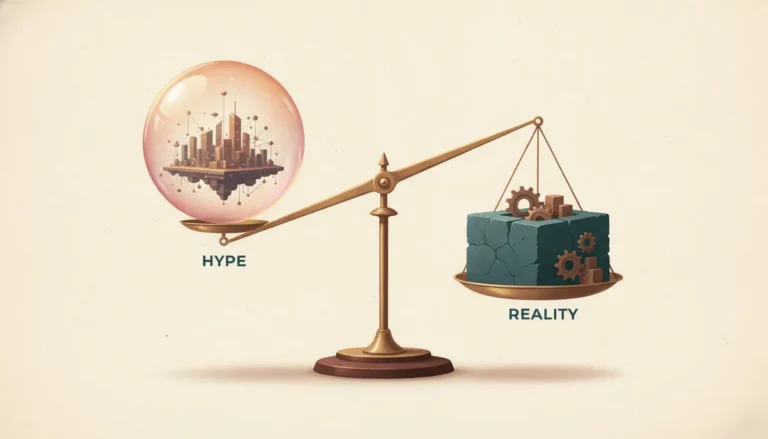
Meme coins as a category tend to show far greater volatility than most other crypto assets, which are themselves already more volatile than traditional markets. Prices can rise sharply on social media momentum and fall just as sharply once attention moves elsewhere. This is not an occasional risk that applies to a few troubled projects — it is closer to a structural feature of the category, because the demand driving these tokens is attention-based rather than tied to any steady, underlying activity that might otherwise provide a floor under the price.
Pump-and-dump dynamics
The meme coin space has also become closely associated with pump-and-dump schemes, where a coordinated group builds hype around a token to drive its price up quickly, then sells into that demand, leaving later buyers holding an asset whose price collapses once the coordinated buying stops. Not every meme coin is a deliberate scheme, and plenty of genuine communities exist without any coordinated manipulation involved. But the low barrier to creating a new token, combined with the attention-driven nature of demand, makes the category a favoured environment for this kind of behaviour, and it is a risk worth taking seriously on any individual token regardless of how organic its community first appears.
Warning signs that observers often point to include a small number of wallets holding an outsized share of the token supply, marketing that emphasises urgency or imminent price action over anything else, and communities built almost entirely around anonymous creators with no verifiable track record. None of these signs guarantee a scheme is underway, and their absence does not guarantee safety either, but they are the kind of pattern worth weighing before assuming a token’s popularity reflects genuine, lasting demand.
The second wave: Shiba Inu and beyond
Shiba Inu emerged as part of a second wave of meme coins that explicitly positioned themselves in relation to Dogecoin’s success, building larger ecosystems around the original joke-token concept, including additional tokens, decentralised exchange projects, and other features layered on top of the core meme identity. This pattern — a simple, culturally resonant token expanding into a broader ecosystem of related products — has repeated across numerous meme coins since, with widely varying degrees of follow-through on the additional features originally announced. Some communities have built lasting projects on top of that initial attention; many others have not, and it is often difficult to tell the two apart in the early stages.
The bottom line
None of this is financial advice, and nothing here is a recommendation to buy, hold, or avoid any specific token. What is worth stating plainly is that meme coins as a category carry a level of risk that is high even by crypto’s already elevated standards. Many meme coins lose the overwhelming majority of their value once initial hype fades, and a large share end up effectively worthless over time. Anyone considering the category should treat it as an area where losing the entire amount invested is a realistic outcome, not a remote tail risk, and should size any position accordingly.
Meme coins occupy a genuine, persistent corner of the crypto market, built on community and attention rather than conventional utility — a foundation that can sustain real, long-running projects, but one that also makes the category unusually vulnerable to manipulation and rapid attention shifts. Coverage of individual tokens and trends across the wider meme coins category is worth following with that context in mind, treating community enthusiasm as a data point, not a guarantee.
The story
Meme coins are a distinct category of crypto asset where community attention and cultural momentum, rather than a defined technical roadmap, function as the primary driver of demand.
The context
Because that demand is attention-based rather than tied to steady underlying activity, the category carries a level of volatility and manipulation risk that is elevated even by crypto's already high standards.
Whether a given token's community and attention prove durable over time, versus fading the way most meme coins eventually do.
The Digital Take is reasoning and data from the Bitcoin Digital Editorial team — context, not a buy or sell call. Not financial advice.
Sources
Frequently asked questions
What makes a cryptocurrency a "meme coin"?
Generally, a token whose value is driven mainly by community attention, humour, and social momentum rather than a defined technical use case or business model. This doesn't automatically make it worthless, but it does mean traditional fundamental analysis often doesn't apply in the usual way.
Is Dogecoin still considered a meme coin?
Yes. Dogecoin is widely credited as the original meme coin, created as a parody rather than a serious technical project, and it remains the reference point the category is generally measured against. Its long history and large community set it apart from many newer meme coins, but its value is still driven primarily by attention rather than a defined technical use case.
Why are meme coins so volatile compared with other crypto assets?
Because their demand is driven primarily by attention and social momentum rather than steady underlying activity, prices can rise quickly on hype and fall just as quickly once that attention moves elsewhere, with little else to provide a floor.
How common are pump-and-dump schemes in meme coins?
The low cost and technical simplicity of launching a new token, combined with attention-driven demand, makes the meme coin space a favoured environment for this kind of behaviour. Not every meme coin is a deliberate scheme, but the risk applies broadly across the category.
Should I invest in meme coins?
This article doesn't make that recommendation — it's general education, not financial advice. Meme coins carry a level of risk, including the realistic possibility of losing the full amount invested, that anyone considering the category should research and weigh independently.
Last updated July 12, 2026

Passionate cryptocurrency journalist at Bitcoin Digital, with a keen interest in fintech, blockchain and bitcoin.