Key takeaways
- A DAO coordinates people and funds through token-based voting and code, rather than a traditional company hierarchy.
- Governance tokens grant voting influence over a protocol's direction, which is separate from whatever trading value the token has.
- Low voter turnout means many DAO decisions are effectively made by a small, motivated minority of token holders.
- Voting power tied to token holdings can concentrate real influence among large holders, including early investors and exchanges.
- DAOs often sit in genuine legal ambiguity, since many jurisdictions have no settled framework for how to classify them.
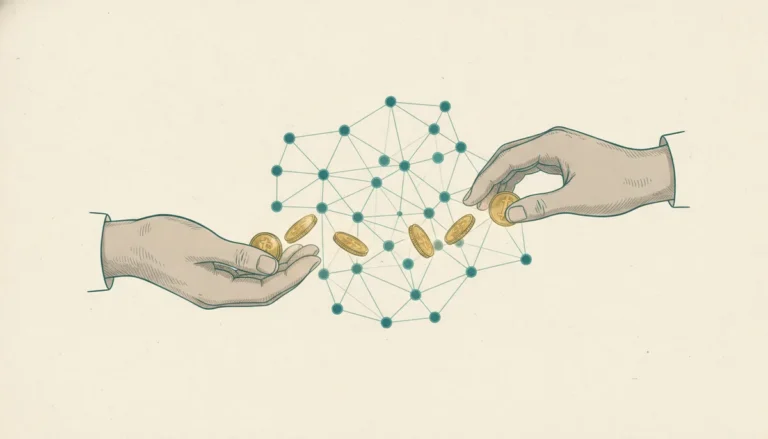
A decentralised autonomous organisation, or DAO, is a way of coordinating a group of people around shared rules and shared funds without a traditional company structure sitting in the middle. Decisions are proposed and voted on by token holders, and the rules for what happens next are enforced by code rather than a board of directors. The idea is genuinely useful, and it also comes with real, well-documented limitations that are worth understanding before treating “DAO” as a synonym for fair or effective governance.
The Basic Mechanics: Proposals, Voting, Execution
Most DAOs follow a similar rough pattern. Someone with enough tokens or standing puts forward a proposal, such as a change to a protocol’s parameters, a grant of funds, or a new feature. Token holders then vote, typically in proportion to how many tokens they hold or have delegated to them. If a proposal passes, in many DAOs the outcome is executed automatically through a smart contract, removing the need for a separate step where a person or company manually carries out what was voted on. In practice, many DAOs mix on-chain execution for some actions with off-chain coordination, such as forums, signalling votes and multisig wallets, for others, rather than running every decision fully on-chain.
Delegation is a common feature layered on top of this basic pattern. Rather than voting on every proposal directly, a holder can assign their voting weight to another address, often a person or organisation that publishes their reasoning and voting history publicly. This is meant to make governance more practical for holders who do not have the time to evaluate every technical proposal themselves, while still keeping the underlying vote tied to token ownership rather than a fixed committee.
Governance Tokens: Voice, Not Just Value
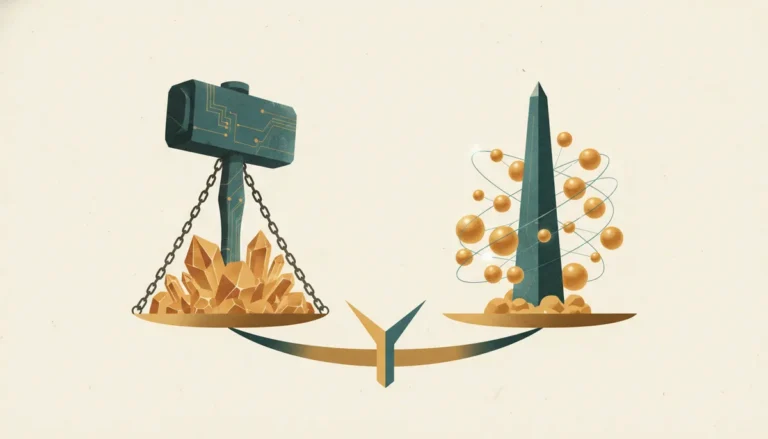
A governance token is the mechanism that grants voting rights within a DAO, and it is worth separating that governance function from whatever trading value the token also happens to have. Holding a governance token typically means holding a claim on influence over the protocol’s future direction — what gets funded, what parameters change, sometimes even how the treasury is spent — rather than a claim on the protocol’s revenue in the way owning equity in a company might work. That distinction matters, because a token can carry real governance weight while its market price is driven by entirely separate factors.
Because governance weight is attached to a tradeable token, it can, at least in principle, be bought rather than earned through participation. A holder who wants outsized influence over a proposal can acquire more tokens on the open market, which is a meaningfully different dynamic to governance systems built around reputation, membership or one-person-one-vote. Most DAOs have not fully resolved how much of a practical problem this is, and it remains one of the more debated design questions in token-based governance.
Treasuries: Who Actually Controls the Money
Many DAOs accumulate a treasury intended for development, grants, incentives or reserves, nominally controlled by the community through voting rather than a single company’s finance department. In practice, treasury control varies widely: some are governed by broad token-holder votes on every significant expenditure, while others delegate day-to-day spending to a smaller multisig group of trusted signers, with only larger decisions going to a full vote. Understanding exactly who can move a DAO’s treasury, and under what conditions, is one of the more concrete ways to judge how decentralised its governance really is in practice, as opposed to in theory.
Treasury composition is also worth a look. A treasury denominated heavily in the protocol’s own governance token behaves differently to one diversified across other assets, since the value available to fund future work can shrink considerably in a prolonged downturn even if the number of tokens held stays the same. Some DAOs have addressed this through deliberate diversification policies decided by vote; others have not, which is itself informative about how far ahead a given DAO’s governance tends to plan.
A Real-World Example of On-Chain Governance
Uniswap, one of the best-known decentralised exchange protocols, is governed through this kind of model: holders of its governance token can propose and vote on changes to the protocol, including how parts of its treasury are deployed. It is a useful example precisely because it shows both sides of the picture — a functioning, long-running system for collective decision-making, operating alongside the same participation and concentration challenges that affect DAO governance generally.
The Honest Limits of DAOs
Four limitations show up repeatedly across DAOs of very different sizes and purposes. The first is voter apathy: in most token-based governance systems, only a small fraction of eligible token holders actually vote on any given proposal, which means outcomes can be decided by a small, motivated minority rather than the broader holder base. The second is concentration: because voting power is typically proportional to tokens held, large holders — sometimes early investors, sometimes the founding team, sometimes exchanges holding customer tokens — can have outsized influence over outcomes, which sits uneasily next to the “decentralised” label. The third is legal ambiguity: in many jurisdictions it remains genuinely unclear how a DAO should be classified or regulated, which creates real uncertainty around accountability and liability for the people participating in one. The fourth is an expertise gap: many proposals involve genuinely technical trade-offs, and the average token holder may not have the time or background to evaluate them properly, which pushes real influence toward whichever delegates or contributors are willing to do that reading.
Why DAOs Still Matter Despite the Flaws
None of these limitations make the underlying idea worthless. Coordinating shared funds and shared decisions transparently, with the rules and the voting record publicly visible, is a genuine improvement over opaque decision-making in some contexts, even when participation is uneven and influence is unevenly distributed. The more useful way to approach any specific DAO is not to ask whether it is “truly decentralised” as a yes-or-no question, but to ask concretely who can propose changes, who actually votes, who controls the treasury, and what happens when those groups disagree. Those specifics say far more than the label does.
The story
Token-based voting lets a distributed group of strangers make collective decisions about a protocol or its treasury without a traditional company structure in the middle.
The context
That structure removes some single points of control but introduces new ones — voter turnout, token concentration and unclear legal status all shape how decentralised a DAO's decisions really are in practice.
How proposal participation and delegate concentration trend over time in a given DAO, since falling turnout is one of the clearest signs of governance narrowing to fewer hands.
The Digital Take is reasoning and data from the Bitcoin Digital Editorial team — context, not a buy or sell call. Not financial advice.
Sources
Frequently asked questions
Do all token holders actually vote in a DAO?
No, and low turnout is one of the most consistent patterns across DAOs of different sizes. Most token holders do not vote on any given proposal, which means outcomes are often decided by a small, engaged minority rather than the full holder base. Some DAOs try to address this through delegation, where holders assign their voting power to someone more active, but overall participation still tends to be low.
Is a DAO legally the same as a company?
Not usually, and that is part of the problem. Many jurisdictions do not have a clear, settled legal category for a DAO, which creates real uncertainty around who is liable if something goes wrong, how the organisation is taxed, and who is legally accountable for decisions made collectively. This is an active area of legal development rather than a solved question, and it varies significantly by jurisdiction.
Can a small number of large holders control a DAO's decisions?
Yes, this is a well-documented limitation. Because voting power is usually proportional to tokens held, holders with large positions, including early investors, founding teams or exchanges holding customer funds, can have outsized influence over outcomes even when a much larger number of smaller holders vote the other way. This concentration risk is one of the main honest criticisms of token-based governance.
What happens if a DAO proposal passes but the core team disagrees with it?
It depends on how much of the DAO's process is enforced automatically through smart contracts versus coordinated off-chain. Where execution is fully on-chain, a passed proposal can execute without further approval. Where execution depends on a smaller multisig group or a development team to implement, disagreement can slow or block outcomes, which is itself a sign of how decentralised the DAO's execution actually is, not just its voting.
Do governance tokens pay holders anything, like a dividend?
Not inherently. A governance token's core function is granting voting rights over a protocol, which is distinct from any right to the protocol's revenue. Some protocols have separately built mechanisms that direct value toward token holders, but this varies enormously by project and is not a universal feature of governance tokens. Always check a specific token's actual mechanics rather than assuming.
Last updated July 12, 2026

An editor with extensive experience covering Bitcoin, blockchain innovation, cryptocurrency markets, and financial technology. Passionate about delivering timely news, in-depth analysis, and educational content for the global crypto community.