Key takeaways
- Blockchain games typically represent in-game items or currencies as on-chain tokens, giving players a form of verifiable, tradable ownership.
- Play-to-earn models pay players in tokens for in-game activity, but that reward pool usually depends heavily on new players buying in.
- When new-player growth slows, token rewards can outpace demand, pushing prices down and reducing the incentive to keep playing.
- Several early play-to-earn economies expanded quickly and then contracted sharply once this dynamic played out.
- Sustainable blockchain game design needs demand sources beyond constant new-player inflow.
Blockchain gaming refers to video games that use blockchain technology to represent in-game items, currencies, or both, typically giving players some form of verifiable ownership that exists outside the game publisher’s own database. Play-to-earn is the specific model within that category where players can earn tradable tokens through gameplay itself. The two ideas are often discussed together, but understanding the difference matters, especially once the conversation turns to whether any of it is sustainable.
What Makes a Game “Blockchain-Based”?
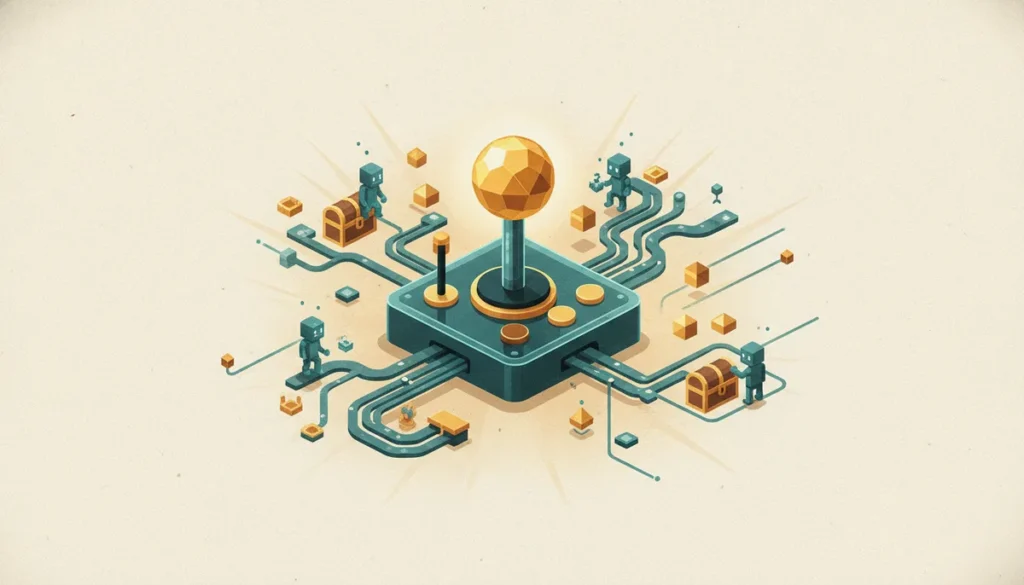
In a typical video game, your inventory, currency and progress live inside a database controlled entirely by the publisher. If the game shuts down, that data usually disappears with it. Blockchain games instead represent some or all of these elements on a public ledger: unique items as NFTs, and in-game currency as fungible tokens that can be transferred, traded, or held outside the game client. This does not make the items automatically valuable; it makes ownership verifiable and, in principle, portable in a way a conventional game database is not.
This addresses a specific limitation of traditional game design: a publisher can create unlimited copies of any digital item at will, which is one reason in-game economies inside conventional games are usually kept separate from real money entirely. Recording items on a public ledger with a defined, auditable supply introduces a form of scarcity that a central database could just as easily enforce, but that a blockchain-based system exposes for anyone to verify independently, rather than asking players to simply trust the publisher’s word.
How Play-to-Earn Is Supposed to Work
In a play-to-earn model, players complete in-game activities – battles, quests, resource gathering – and receive token rewards for doing so. Those tokens can then be sold on an exchange or used within the game’s own economy to buy items, upgrades or other benefits, depending on the design. The pitch is straightforward: playing the game can generate something with tradable value, rather than only entertainment.
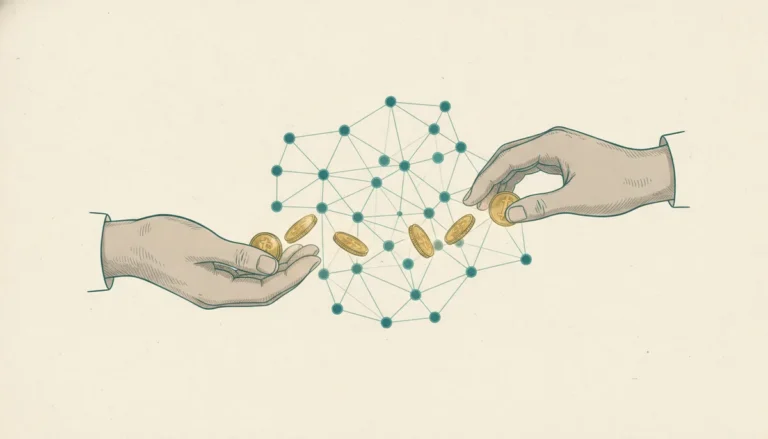
The mechanics behind that pitch are less straightforward. Reward tokens have to come from somewhere, and in most early designs, a significant share of that value ultimately traced back to new players buying into the game, whether by purchasing starter assets, tokens, or both. Existing players were, in effect, partly paid from money brought in by new players, a structure that works well while the player base is growing quickly and breaks down once it is not.
Tokenised Economies and the Metaverse Connection
Play-to-earn games are often discussed alongside the broader idea of the metaverse, persistent, connected virtual worlds where identity, assets and currency are meant to carry across different experiences. In practice, most blockchain games remain self-contained: their tokens and items work within that specific game and rarely transfer meaningfully to other platforms, despite marketing language that sometimes implies otherwise. The metaverse framing describes an aspiration for the category more than it describes how most existing games actually function today.
Governance and Player-Owned Economies
Some blockchain games extend the ownership idea beyond individual items into governance, giving token holders a vote over specific economic parameters, such as reward rates or which new items get added. The pitch is that players with a financial stake in a game’s economy should have some say in decisions that affect it, similar in spirit to shareholder voting in a company, though far less formal and usually limited to a narrow set of decisions.
In practice, participation in this kind of governance tends to be limited to a small, active minority of token holders, a pattern seen across most on-chain governance systems and not unique to gaming. It is a genuine structural difference from a conventional game, where the publisher makes every decision unilaterally, but it does not automatically mean decisions get made more wisely or fairly, only that the process for making them is more transparent.
Why Sustainability Became a Problem
The core sustainability issue in early play-to-earn design was straightforward: reward tokens were often minted continuously to pay players, while genuine external demand for those tokens – demand not linked to new players buying in – was frequently limited. As long as new players kept arriving faster than tokens were being emitted and sold, prices could hold or rise. Once player growth slowed, for any reason, the balance flipped. More tokens were being emitted and sold than new buyers were arriving to absorb, and prices fell.
Falling token prices then reduced the real earnings from playing, which reduced the incentive to keep playing, which further slowed new-player growth. Several early play-to-earn economies expanded very quickly during their growth phase and then contracted just as sharply once this reinforcing cycle set in. This is a structural pattern worth understanding on its own terms, independent of any specific game, because the same basic mechanics can recur in future projects that use a similar reward design.
A related concept is the token sink, a built-in way for tokens to leave circulation, through crafting fees, upgrade costs, or similar mechanisms, rather than only ever being added through rewards. Games with weak or absent sinks effectively only ever add supply, which makes the imbalance between new tokens and genuine demand even more pronounced. Games designed with meaningful sinks have a structural tool for offsetting emissions, though a sink only helps if players actually have a reason to use it regularly.
Lessons for Evaluating Blockchain Games Today
None of this means blockchain gaming or play-to-earn mechanics are inherently broken, only that reward systems funded mainly by new-player capital carry a specific, well-understood structural risk. A more sustainable design needs sources of demand for its token beyond new players buying in, whether that is genuine utility within the game, external demand, or a capped and predictable supply that does not depend on constant growth to hold its value.
This is not financial advice. Anyone evaluating a blockchain game’s earning potential should look past the marketing and examine the actual token supply mechanics: how new tokens enter circulation, what creates demand for them beyond new-player purchases, and what happens to the economy if player growth slows or reverses. For ongoing coverage of how these models are evolving, see our gaming section.
The story
Blockchain gaming experimented with letting players earn tradable tokens and own in-game items as NFTs, and several early play-to-earn economies grew quickly before shrinking sharply once new-player growth slowed.
The context
The pattern exposed a structural weakness in reward models that depend on a constantly growing base of new participants to fund payouts to existing ones, a dynamic worth understanding before treating any in-game token as an income source.
Whether newer blockchain games can design token economies that hold up without relying on continuous new-player capital.
The Digital Take is reasoning and data from the Bitcoin Digital Editorial team — context, not a buy or sell call. Not financial advice.
Sources
Frequently asked questions
Is play-to-earn the same as blockchain gaming?
No. Blockchain gaming is the broader category of games that use blockchain technology for items, currencies or ownership records. Play-to-earn is a specific reward model within that category, where players can earn tradable tokens through gameplay. A blockchain game does not have to use a play-to-earn model, and some deliberately avoid it to reduce speculative pressure on their economy.
Why did some play-to-earn games lose most of their value?
Many early play-to-earn economies relied on new players buying tokens or assets to enter the game, and that inflow of capital funded rewards paid to existing players. When the pace of new players slowed, the reward supply kept growing while demand did not, pushing token prices down. Falling rewards then reduced the incentive for existing players to stay, reinforcing the decline.
Can you earn a meaningful income from play-to-earn games?
It depends entirely on the specific game's token price and reward structure at any given time, both of which can shift quickly and unpredictably. Some players have earned tokens with real value during periods of high demand, but treating this as a stable income source carries significant risk. This is not financial advice, and anyone considering it should research the specific token thoroughly first.
Do I actually own my in-game items in a blockchain game?
You typically own the token that represents the item, recorded on a public blockchain, which differs from owning items in a traditional game database controlled entirely by the publisher. In principle this lets you trade or move the item independently of the game. In practice, the item's usefulness still usually depends on the game continuing to exist and support it.
What should I check before trying a blockchain game's token economy?
Look at how new tokens enter circulation, whether rewards are funded by new-player purchases or by genuine external revenue, and how total token supply is expected to grow over time. A game that can only pay rewards by attracting new buyers is structurally fragile, regardless of how it is marketed.
Last updated July 12, 2026

Experienced editor focused on Bitcoin, digital assets, blockchain infrastructure, and fintech innovation. Writes and edits content covering market trends, regulation, institutional adoption, and the technologies shaping the future of digital finance.